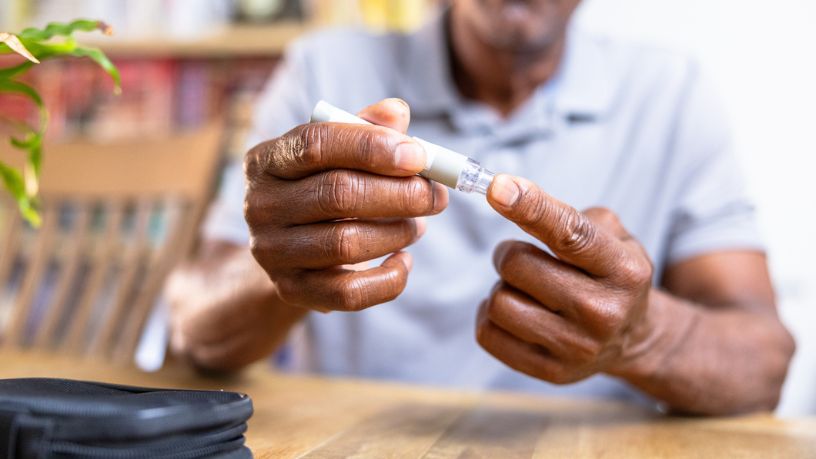
An insulin pump could help you to effectively manage your diabetes.
By Tracy McBeth Writer

By Tracy McBeth Writer
An insulin pump could help you to effectively manage your diabetes.
While insulin pumps are usually used to treat people with type 1 diabetes, they can be used by anyone who needs insulin therapy.
There are a range of pros and cons when considering if a pump is right for you.
If keeping on top of your insulin levels is a daily struggle, this tiny piece of technology could make a big difference to your diabetes management.
Here, we explore the pros and cons of insulin pumps, helping you to start the conversation with your doctor about whether one may be right for you.
An insulin pump is a wearable device that’s smaller than a smart phone. It continuously delivers insulin through a small tube that’s inserted under the skin.
The pumps are designed to mimic the natural release of insulin by delivering small amounts of rapid-acting insulin around the clock, boosting the release as needed to cover meals or correct high blood glucose (sugar) levels.
Typically, they’re used to help manage type 1 diabetes. But insulin pumps can help anyone who needs insulin therapy. While the device has many benefits around lifestyle and convenience, it can also be a potential lifesaver if you have regular or unpredictable low blood glucose levels, or if your routine tends to change a lot.
While all insulin pumps have slightly different features, the overall aim is to program the device to deliver a steady stream of rapid-acting insulin around the clock.
Insulin pumps can also correct your blood glucose levels after eating by delivering additional insulin to match the amount of carbohydrates that you’re going to eat, or to correct high blood glucose levels.
While a pump can help control your blood glucose levels, you still need to check them regularly, either with a glucose meter or continuous glucose monitor (CGM).
Some insulin pumps can be connected to a compatible CGM to create what’s known as an ‘artificial pancreas’ or closed-loop system.1 Using these devices together means the right dose of insulin is automatically delivered based on your blood glucose levels at that time.
There is a range of benefits that come with using an insulin pump. These include:
Insulin pumps can allow you to have more flexibility around your meals, exercise and insulin delivery. This is particularly helpful if your insulin levels vary, or your eating patterns fluctuate.
The continuous delivery of insulin from a pump is more precise and can help maintain stable blood glucose levels, reducing your risk of high or low blood sugar (known as hypoglycaemia and hyperglycaemia).
An insulin pump replaces the need for multiple daily insulin injections, making dosing more convenient and comfortable.
Insulin pumps are easy to use and can be programmed to deliver insulin automatically based on a pre-set schedule or in response to changes in blood glucose levels.
Many insulin pumps have built-in blood glucose meters and can track and store data, making it easier for your treating team to monitor your glucose levels, and adjust insulin dosing as needed.
On the flipside, having an insulin pump can come at a cost, both literally and otherwise. Some main drawbacks include:
Insulin pumps are expensive, costing between $5,000 and $10,000. If you have private health insurance, an insulin pump may be covered. Speak to your insurer about your policy.
Insulin pump consumables (IPCs), including reservoirs and infusion sets, can cost around $20 to $30 per month. They are subsidised by the National Diabetes Service Scheme (NDSS), but only for those living with type 1 diabetes.2
Insulin pumps are electronic devices, and like all technology there can be issues or malfunctions.
You should always have current prescriptions for the rapid-acting insulin used in the pump. It’s also advised to keep backup prescriptions for injectable insulin, needles and syringes or insulin pens, should the pump fail.
Make sure you check your pump every day to ensure it’s running well, has enough insulin and has a fully charged battery.
Some people may experience skin irritation or infections at the site of the pump or infusion set.
If technology doesn’t come naturally to you, there may be a learning curve to familiarise yourself with the device. Make sure you’re properly trained on how to use your pump, and that you have access to support from your treating team.
Advances in medical technology have allowed insulin pumps to play a greater role in diabetes management. But an insulin pump is a device that’s worn at all times, and that might not suit you.
While many people find insulin pumps convenient and effective, they’re not a set-and-forget device. It’s still vital to check your blood glucose levels regularly and have an insulin back-up plan.
If you want to try an insulin pump, talk to your diabetes treating team. They can help you find the right pump for your individual needs.

Diabetes Australia offers resources on preventing and living with diabetes. Visit their website or call them on 1800 177 055.
The National Diabetes Service Scheme (NDSS) offers online resources, advice and a dedicated helpline on 1800 637 700.
Tracy McBeth Writer
Tracy is a journalist with a passion for promoting good health, both mentally and physically.
At Bupa, trust is everything
Our health and wellbeing information is regularly reviewed and maintained by a team of healthcare experts, to ensure its relevancy and accuracy. Everyone's health journey is unique and health outcomes vary from person to person.
This content is not a replacement for personalised and specific medical, healthcare, or other professional advice. If you have concerns about your health, see your doctor or other health professional.
1Juvenile Diabetes Research Foundation. (2024). Hybrid closed loop technology. Juvenile Diabetes Research Foundation.
2National Diabetes Services Scheme. (2024). Insulin pump consumables. National Diabetes Services Scheme.
Testing your blood glucose levels can be one of the more tiring parts of diabetes management. But with a few tweaks, it can be easy.
Managing your diabetes doesn’t have to be hard. Discover 6 of the latest technology options that can help you
Understanding the different types of diabetes helps you take control of your health and reduce future risk.
Regular health checks and tests can help to manage diabetes and prevent serious health complications.