By Chris Eldridge Dietitian and Diabetes Educator

6 minute read
Published 12 August 2026
Chris Eldridge Dietitian and Diabetes Educator
Chris is a Clinical and Sports Dietitian with a passion for promoting positive health and preventative care.
By Chris Eldridge Dietitian and Diabetes Educator
How to check your blood glucose levels
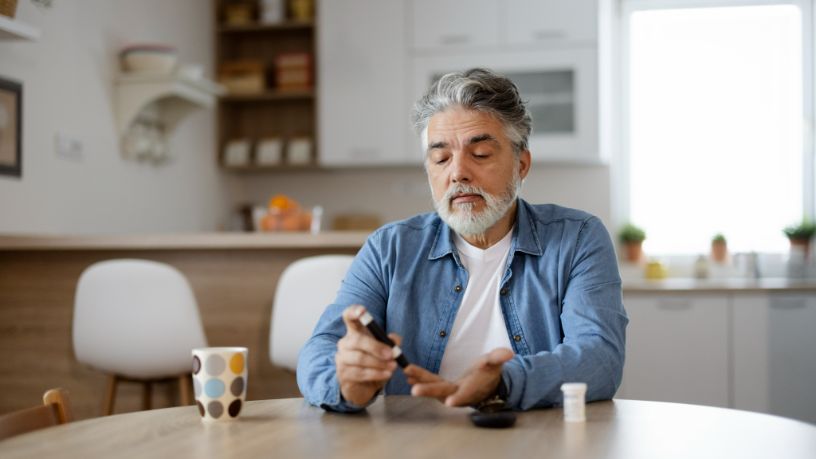
Checking your blood glucose levels might feel like just another thing on your to do list, but when you understand what the numbers are trying to tell you, they can become a very useful tool for managing your diabetes.
Whether you're using a fingerprint glucose metre, commonly called a glucometer, or a continuous glucose metre or CGM for short, the goal is the same.
It's about understanding how your blood glucose levels change throughout the day and what might be influencing them.
Whether it's food, physical activity, stress, illness, sleep, or medication, they can all have an impact.
How often you check your blood glucose levels will also depend on the type of diabetes you have and your individual circumstances.
Your healthcare team can help you work out what's right for you.
You might check before meals, after meals, before exercise, or at other times recommended by your healthcare team.
The important thing isn't about collecting your numbers, is understanding what those numbers are trying to tell you.
For example, you might check before and after a meal to see how certain foods affect your blood sugar.
Or you might check around physical activity to understand how exercise effects your levels.
Over time, patterns start to emerge.
One reading on its own doesn't tell the whole story.
It's the trends over time that can be most helpful.
And that's why it's important not to judge yourself on a single result.
Blood glucose levels naturally go up and down throughout the day.
If you're using a glucometer, there are a few simple things that can help improve accuracy.
Wash and dry your hands before testing.
With this, make sure you remove all soap residue from your hands as it can falsely increase your BGL readings.
It's also important to ensure your test strips are stored correctly and haven't expired.
I recommend keeping a record of your readings either in an app, a diary or through your glucometer.
This can make it easier to spot patterns and have more meaningful conversations with your healthcare team.
You might be wondering whether a glucometer or a CGM is right for you.
Well look, the reality is there is no one size fits all approach.
A glucometer can be a simple and effective way to check your glucose levels at a specific point of time, whereas a CGM provides glucose readings throughout the day and it can make it easier to check patterns and changes as they happen.
For some people, the extra information can be really helpful, whereas for others, finger prick testing provides all the information that they need.
Whatever method you choose, remember that blood glucose monitoring isn't about a perfect score.
It's about understanding your body just that little bit better.
See you next time.
Checking blood glucose levels can help you understand what makes your numbers go up or down, including meals, activity, medication and being unwell.
You can then discuss this information with your diabetes health professionals to support decisions about diabetes management.1
That is the real value of monitoring. It’s not about collecting more numbers or aiming for a perfect score every day. It’s about learning how your body reacts to different situations, then using that information to make practical decisions with your healthcare team.
Some people use a fingerprick glucose meter (glucometer) and others use a continuous glucose monitor (CGM).
A glucometer gives a blood glucose reading at a specific point in time. A CGM provides glucose information across the day and may make it easier to see trends and changes as they happen.1
There's no one-size-fits-all option. What’s useful for one person may not be necessary for someone else.
The type of diabetes you are living with, your medication, risk of hypoglycaemia, budget, preferences and clinical goals all matter. Your GP, diabetes educator or endocrinologist can help you work out what's right for you.
How often you check depends on your individual circumstances. Some people may check before meals, after meals, before exercise, before driving, when unwell, or when symptoms don’t match how they expect to feel. Others may check less often. The key is to follow the plan developed with your healthcare team.1
A useful question to ask is: what decision will this reading help me make? For example, checking before and after a meal may show how a particular food affects you. Checking around activity may help you understand how movement influences your levels.
If your readings are confusing, take your record to your next appointment and ask your healthcare team to help interpret the patterns.
At Bupa, trust is everything
Our health and wellbeing information is regularly reviewed and maintained by a team of healthcare experts, to ensure its relevancy and accuracy. Everyone's health journey is unique and health outcomes vary from person to person.
This content is not a replacement for personalised and specific medical, healthcare, or other professional advice. If you have concerns about your health, see your doctor or other health professional.
Know what to do when blood glucose is high, low or unusual: pause, follow your plan, recheck and seek support if needed.
Left unmanaged, hyperglycaemia can have serious consequences for your health. Here’s how to spot the early warning signs.
Your blood glucose readings show what’s happening day to day, while HbA1c reveals the bigger picture over time. Here’s why both matter for your diabetes.
Managing your diabetes doesn’t have to be hard. Discover 6 of the latest technology options that can help you
Bupa acknowledges and shows respect to the Traditional Custodians of Australian land. We pay our respects to Elders past and present and recognise their cultural heritage, beliefs, and continuing connection to land, waters, and community. We embrace their knowledge on how to protect and nurture these lands, and all they contain, to keep this country and people healthy.