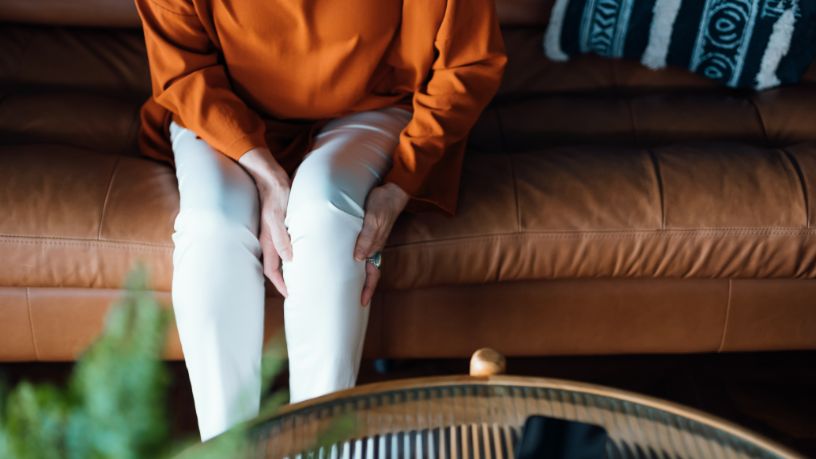
A knee arthroscopy can treat a number of knee conditions, reducing pain and improving quality of life.
By Jenny Boss Health writer

By Jenny Boss Health writer
A knee arthroscopy can treat a number of knee conditions, reducing pain and improving quality of life.
Like any surgery, the operation involves potential risks and side effects. It’s also not recommended for treating osteoarthritis.
Recovering from a knee arthroscopy is relatively quick, but you can speed up the process with the right planning.
A knee arthroscopy is a keyhole surgery designed to look inside your knee to diagnose and potentially treat pain and other knee problems. The operation uses an ‘arthroscope’, a thin metal tube that contains a camera, to guide your surgeon through the procedure.
Here, we look at what you can expect from a knee arthroscopy, plus advice on how to prepare and recover from the operation.
As the largest joint in your body, your knee plays an important role. So, if you have ongoing pain caused by things like a meniscal tear, your doctor may recommend a knee arthroscopy.
During the operation, a surgeon investigates your knee to find the cause of your symptoms. They may also repair or remove any damaged tissue and cartilage.
Sometimes, your surgeon may perform a more complex surgery during a knee arthroscopy, such as repairing torn knee ligaments or treating an unstable kneecap. They may also take small tissue samples to help to diagnose things like infection.
Your doctor might be able to diagnose your knee problem without a knee arthroscopy, via an X-ray, MRI or, in some cases, CT scan. A knee arthroscopy is not considered an effective treatment for osteoarthritis.1
If you’re planning or considering a knee arthroscopy, it’s important to be fully informed about the potential risks, side effects and recovery commitments. Don’t be afraid to ask your doctor any question about the surgery, however small.
As smoking makes you more likely to experience complications like infection and delayed healing after surgery, you may be asked to stop. Smoking can also make your surgery less effective.2
A knee arthroscopy is usually performed under a general anaesthetic. But, depending on the nature of your surgery, it may be done using a local anaesthetic.
You may be asked to wear a compression stocking on your unaffected leg during the surgery to prevent blood clots. You may also require an anti-clotting injection.
A knee arthroscopy is typically performed in less than an hour. The surgeon begins by making small cuts around the knee, before inserting the arthroscope. Sterile fluid is used to rinse out your knee joint, which helps your surgeon look around.
Your surgeon will most likely take photos of the affected areas. Once they’ve diagnosed the problem, they may decide to treat your knee mid-surgery, to repair or remove any damaged tissue.
You can usually go home on the same day as your operation. However, in some cases you may need to stay in hospital overnight.
It can take several hours before feeling comes back to your knee. As the numbness wears off, you may notice some discomfort and swelling, which is normal.
It’s a good idea to get someone to pick you up from the hospital and stay with you for a day or so while the anaesthetic wears off. General anaesthetic can affect your memory and reflexes for up to 2 days. So, it’s important that you don’t drive, drink alcohol or sign anything important during this period.3
Depending on the procedure, you may not be able to put weight on your leg for up to a week after your surgery. You may need help (or an aid) to stand or walk.
Your nurse may give you advice about caring for your wounds, removing your dressing and bathing. You might be asked to wear a compression stocking while you recover, to improve blood flow and reduce your risk of deep vein thrombosis (DVT).
Discover health cover that's right for you with a range of personalised programs and services designed to support your health and wellbeing.
Everyone responds to surgery differently. But, you may expect the following side effects following your knee arthroscopy:
Like any surgery, a knee arthroscopy carries several risks. Potential complications include:
A knee arthroscopy may also increase your risk of osteoarthritis or cause arthritis to develop more rapidly.4
Because the arthroscope and surgical instruments are thin, your surgeon will only make small incisions. Which can make recovery faster than open knee surgery.
Unfortunately, some people continue to experience some knee pain after keyhole knee surgery.4 Although, they may still benefit from fewer symptoms.
If you’re looking to speed up your recovery, you might do the following:
While you won’t be back in the gym right away, recovering from a knee arthroscopy is relatively fast.
It generally takes between 6 and 8 weeks before you can return to normal physical activities.5 That said, you should be walking around right after your operation, depending on your specific knee condition.
Your surgeon may recommend a week of 2 of downtime before you start gentle exercise, such as walking. Once you can, it’s important to gradually but regularly exercise to restore your knee. Your physiotherapist may recommend exercises that strengthen your knee and increase mobility.5
You may feel more tired than usual following your operation. Things like grocery shopping may be harder, so it’s a good idea to think about ready-made meals and home deliveries. You might also call on friends, family and neighbours to help out.
Other post-surgery considerations include:
Musculoskeletal Health Australia provides information and support for people living with arthritis and musculoskeletal conditions. Visit their website or call them on 1800 263 265.
Pain Australia works towards improving the quality of life for those living with pain. Visit their website for resources and support, including their National Pain Services Directory.
NSW Government Health’s Patient Roadmap is a handy step-by-step guide to preparing for and recovering from surgery.
The Australian Physiotherapy Association can help you find a physio near you.
Jenny Boss Health writer
Jenny is a health writer and qualified nutritionist with a passion for debunking nutrition myths and making eating well accessible to everyone.
At Bupa, trust is everything
Our health and wellbeing information is regularly reviewed and maintained by a team of healthcare experts, to ensure its relevancy and accuracy. Everyone's health journey is unique and health outcomes vary from person to person.
This content is not a replacement for personalised and specific medical, healthcare, or other professional advice. If you have concerns about your health, see your doctor or other health professional.
1Arthritis Foundation. (2024). Arthroscopy Not Recommended for Arthritis. Arthritis Foundation.
2World Health Organization (2020). Smoking greatly increases risk of complications after surgery. World Health Organization.
3NHS. (2021). General anaesthesia. NHS.
4Shmerling, R.H. (2020). Knee arthroscopy: Should this common knee surgery be performed less often?. Harvard Health Blog.
5Alaia, M. J. & Wilkerson, R. (2022) Knee Arthroscopy. American Academy of Orthopaedic Surgeons.
6Bui, M.H., Hung, D.D., Vinh, P.Q., Hiep, N.H., Anh, L.L., & Dinh, T.C. (2019). Frequency and Risk Factor of Lower-limb Deep Vein Thrombosis after Major Orthopedic Surgery in Vietnamese Patients. Open access Macedonian journal of medical sciences, 7(24), 4,250-4,254.
Your knees are the largest joints in your body. They’re also among the most accident prone. Get to know the basics of knee pain.
Knee surgery is a major operation that may require months of intensive recovery. Discover 7 common insights from those who’ve done it.
If you’ve had knee surgery, support your recovery with these 5 physiotherapist-approved exercises. Regain strength and mobility safely at home.
Recovering from knee surgery looks different for everyone. Find out about the reality of rehab from 2 people who’ve been through it.