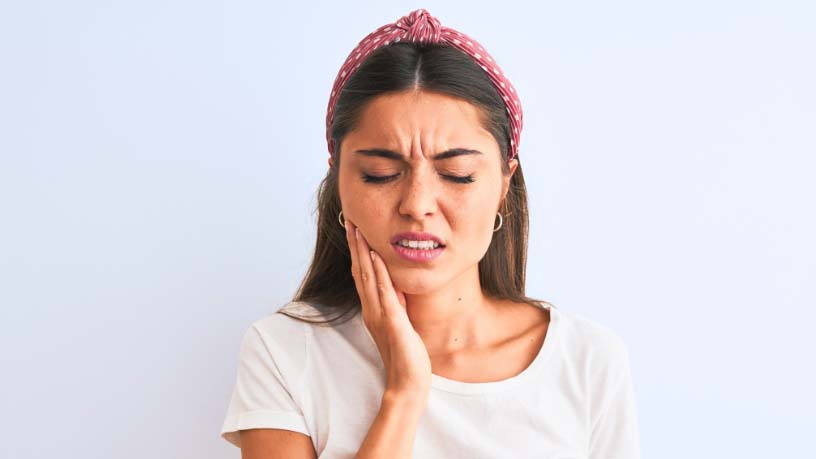
Symptoms can include jaw pain, stiffness, clicking or popping, headaches, earache or ear pressure and difficulty chewing.

By Trudie McConnochie Writer

4 minute read
Last Updated 6 August 2026
Symptoms can include jaw pain, stiffness, clicking or popping, headaches, earache or ear pressure and difficulty chewing.
TMJ dysfunction often improves with simple measures you can try at home, but ongoing or severe jaw pain should be checked by a GP or dentist.
Trudie McConnochie Writer
Trudie is a Sydney-based journalist who specialises in health and wellbeing.
By Trudie McConnochie Writer
Temporomandibular joint dysfunction, often called TMJ dysfunction or TMD, affects the jaw joints and the muscles around them.
Your jaw is probably not something you think about much until it starts to hurt.
If you have pain when chewing, trouble opening your mouth, or clicking or popping sounds when you move your jaw, you may have temporomandibular joint dysfunction. This is often shortened to TMJ dysfunction or TMD.
Your temporomandibular joints are found on each side of your face, and connect your lower jaw to your skull. They help you open and close your mouth so you can eat, speak, swallow and make facial expressions. TMJ dysfunction happens when there's a problem with the joint, the muscles around it, or both.
TMJ dysfunction can affect adults of any age, but it is most often reported in adults aged 20 to 40. Women are at least 4 times more likely to experience it.1
TMJ dysfunction can affect one or both joints and surrounding muscles. Symptoms can range from mild to severe and may come and go.
Common symptoms include:
TMJ dysfunction can have many causes, and sometimes there's no clear cause. It may be linked to bruxism, which is the clenching or grinding of your teeth. Other possible causes include:
In some people, the cause is never found.
Teeth grinding, also called bruxism, is common. Many people grind or clench their teeth from time to time, but a smaller number do it regularly enough to cause symptoms or dental problems.2,3
Common triggers and risk factors for bruxism include:
If you grind your teeth while sleeping, you might not realise you’re doing it. A partner may hear the sound, or you may find yourself waking up with unexplained soreness in your jaw.
As well as contributing to TMJ dysfunction, ongoing teeth grinding can damage teeth, disturb sleep and cause facial pain.4
If jaw pain is bothering you, see your GP or dentist. They can examine your jaw and teeth and may refer you for imaging, such as an X-ray, CT scan or MRI, if needed.
In many cases, TMJ dysfunction improves with simple measures you can try at home. Your GP or dentist may suggest:
Pain relief. Pain-relief medicines or anti-inflammatory medicines may help some people. A warm compress on the painful area may also ease soreness.
Mind and body techniques. Approaches such as biofeedback may help some people manage muscle tension and involuntary body responses.5
Support for stress or anxiety. If stress, anxiety or other emotional factors are contributing to jaw clenching, psychological support or therapy may help.
Jaw exercises. Gentle stretching or jaw exercises may help improve movement, although they may not reduce pain for everyone.1
Teeth-grinding strategies. These may include a dentist-fitted mouthguard or splint at night, cognitive behavioural therapy, exercise and relaxation techniques.
Lifestyle changes. This may include eating softer foods, cutting food into small pieces and avoiding habits that strain the jaw, such as chewing gum.
Specialist treatment. Surgery or other specialist procedures are usually only considered when symptoms are severe, persistent and have not improved with conservative treatment.
At Bupa, trust is everything
Our health and wellbeing information is regularly reviewed and maintained by a team of healthcare experts, to ensure its relevancy and accuracy. Everyone's health journey is unique and health outcomes vary from person to person.
This content is not a replacement for personalised and specific medical, healthcare, or other professional advice. If you have concerns about your health, see your doctor or other health professional.
1 Lomas, J., Gurgenci, T., Jackson, C., & Campbell, D. (2018). Temporomandibular dysfunction. AJGP, 47(4).
2 Murali, R. V., Rangarajan, P., & Mounissamy, A. (2015). Bruxism: Conceptual discussion and review. Journal of pharmacy & bioallied sciences, 7(1), S265-S270.
3 Better Health Channel. (2020). Teeth grinding. Victoria State Government, Department of Health.
4 Cleveland Clinic. (2023). Bruxism (Teeth Grinding). Cleveland Clinic.
5 Mayo Clinic. (2023). Biofeedback. Mayo Clinic.
Good oral hygiene does more than protect your teeth; it may also support your heart, blood sugar and overall health.
If you’re having trouble sleeping, your teeth might be to blame. Find out how bruxism may be affecting you.
The most common arthritis in Australia, osteoarthritis develops over time and can result in painful joints. Find out how this condition might affect you.
You might have brushed your teeth every day of your life, but you may be getting some things wrong. Learn how to improve your dental game with expert tips.
Bupa acknowledges and shows respect to the Traditional Custodians of Australian land. We pay our respects to Elders past and present and recognise their cultural heritage, beliefs, and continuing connection to land, waters, and community. We embrace their knowledge on how to protect and nurture these lands, and all they contain, to keep this country and people healthy.