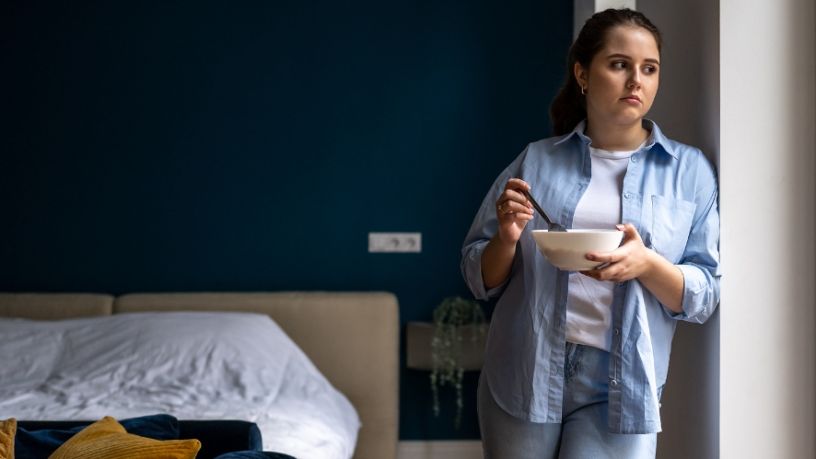
Both conditions have common signs and symptoms you can be on the lookout for.

By Nicole Vanderkroef Health writer

7 minute read
Published 11 April 2024
Both conditions have common signs and symptoms you can be on the lookout for.
Anxiety and depression are commonly treated with therapy and medication, and there is plenty of professional support available online and over the phone.
Nicole Vanderkroef Health writer
Nicole started her career as a chemist, but traded the lab for a laptop and has been a medical and health journalist ever since.
By Nicole Vanderkroef Health writer
Anxiety and depression both have an impact on your mood and feelings, and can also affect your physical health.
With one in 5 Australians experiencing a mental health condition each year, chances are you know someone experiencing depression or anxiety, or perhaps you experience symptoms yourself.1
While they are 2 of the most common mental health concerns, they can affect people differently. Here’s a brief overview of what you might expect.
Depression and anxiety both relate to your mood and feelings and can affect you physically.
The difference between them comes down to the symptoms. Depression is a persistent feeling of sadness or hopelessness (though it can also show up in other ways, like feeling irritable or lacking energy). Anxiety involves feelings of fear or worry that are difficult to control.
We all experience feelings of anxiety and low mood from time to time. Symptoms can be different for everyone, and just because you experience some symptoms doesn’t mean you have an anxiety or depression disorder.
However, if your symptoms are affecting your everyday life, it may be worth a visit to your GP to find out more.2
Depression is defined by having a low mood and/or loss of interest or enjoyment in most activities for 2 weeks or longer. With depression, you might also experience:
Anxiety is an umbrella term that covers a range of more specific conditions. The most common is generalised anxiety disorder (GAD).
When it comes to GAD, a person may experience excessive anxiety and worry on most days, and difficulty controlling these feelings, for 6 months or more. With GAD, you might also experience:
On the physical side, there’s an overlap of symptoms for both depression and GAD. These include:
With depression, you might also experience:
With GAD, you might also experience:
Keep in mind that any of these symptoms can point to signs of other problems with your physical health. So, it’s important to speak with your GP if you’re concerned.
Around 50% of people with an anxiety disorder will also have depression, and it’s estimated that up to 85% of people with depression experience symptoms of anxiety.3
It’s also possible to have symptoms of both at a level that doesn’t lead to a diagnosis of either. This is called ‘mixed anxiety and depressive disorder’.
You can also be diagnosed with one of the conditions and have symptoms of the other, but at a level that isn’t severe enough to lead to a second diagnosis.
As diagnosis can’t ever fully capture someone’s personal experience, it’s important to think of yourself as unique when it comes to understanding these conditions.
There’s lots of help available for anxiety and depression, with different types of support to choose from. For both, the 2 main treatment options are:
You’ll often find that treatment approaches combine both psychological therapies and medicines, tailored to the individual and their specific situation. Your doctor may also look at lifestyle issues.
Anxiety and depression are very common conditions, and most of the time they’re very treatable.
If you or someone you know is struggling with some of the symptoms mentioned here, know that you’re not alone and help is available.
Contacting your GP is a great place to start. You can also reach out to some of the organisations listed below.

If yours or someone else’s life is in danger, dial 000 immediately.
Lifeline Australia offers 24/7 crisis support online and on the phone at 13 11 14.
Beyond Blue offers 24/7 mental health information and support online and on the phone at 1300 224 636.
13YARN offers a national crisis support line for First Nations People on 13 92 76. The support line is available 24/7.
1800Respect is a 24/7 support service for people experiencing domestic violence. You can find support, counselling and information online or on the phone at 1800 737 732.
PANDA (Perinatal Anxiety & Depression Australia) supports the mental health of parents and families online and on the phone at 1300 726 306.
MensLine is a counselling service for men. You can get 24/7 support online and on the phone at 1300 78 99 78.
QLife offers LGBTQIA+ peer support online and over the phone on 1800 184 527.
At Bupa, trust is everything
Our health and wellbeing information is regularly reviewed and maintained by a team of healthcare experts, to ensure its relevancy and accuracy. Everyone's health journey is unique and health outcomes vary from person to person.
This content is not a replacement for personalised and specific medical, healthcare, or other professional advice. If you have concerns about your health, see your doctor or other health professional.
1Australian Government, Australian Institute of Health and Welfare. (2024). Prevalence and impact of mental illness. Australian Government, Australian Institute of Health and Welfare.
2Healthdirect. (2022). Anxiety. Healthdirect.
3Hirschfeld, R. M. (2001). The comorbidity of major depression and anxiety disorders: recognition and management in primary care. Primary Care Companion, Journal of Clinical Psychiatry, 3(6), 244-254.
Panic attacks can happen at any time. Discover practical calming techniques and breathing exercises to manage a panic attack and ease your symptoms.
We look at orthorexia, an obsession with certain so-called ‘healthy’ diets, which can lead to nutritional deficiencies or even malnutrition.
The holiday season can be a difficult time for many of us, with grief, loneliness and stress overshadowing the festivities. Don’t let anxiety take over this Christmas with these tips.
There are a lot of professional options when it comes to caring for your mental health, but do you know what kind of practitioner is right for your needs?
Bupa acknowledges and shows respect to the Traditional Custodians of Australian land. We pay our respects to Elders past and present and recognise their cultural heritage, beliefs, and continuing connection to land, waters, and community. We embrace their knowledge on how to protect and nurture these lands, and all they contain, to keep this country and people healthy.