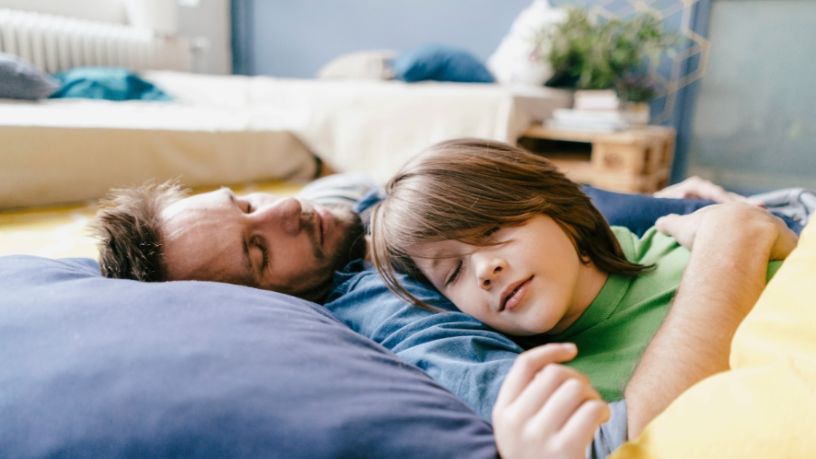
Each stage has its own specific characteristics and functions.

By Judith Ngai Health writer

6 minute read
Published 11 April 2024
Each stage has its own specific characteristics and functions.
Sleep helps your body renew and repair your cells.
During non-REM sleep your brain is inactive but your body may still move around while it settles and relaxes.
Your body starts to relax as you switch between being asleep and awake. It’s easy to be woken during this stage. If you are, you don’t usually feel like you’ve been asleep at all.
Judith Ngai Health writer
Judith is a pharmacist and health content specialist.
By Judith Ngai Health writer
Your body cycles through several stages sleep throughout the night.
You may be surprised to know how much is happening within your body when you go to sleep at night. As you drift into different sleep stages, each of which has specific characteristics, your body is busy repairing and renewing cells.
During a full night's sleep, your brain generally cycles several times between 2 types of sleep: rapid eye movement (REM) sleep and non-rapid eye movement (non-REM) sleep. Most people begin their sleep cycle with the 3 stages of non-REM sleep, followed by a short period of REM sleep.
Your body temperature drops and your breathing and heart rate slow down. You may feel increasingly unaware of your surroundings but can still be woken up easily.
Some people may experience sudden muscle twitches, sometimes preceded by a sensation of starting to fall or trip. These sudden movements are called ‘hypnic jerks’ and are similar to the jump we make when startled.
This is also known as slow-wave or delta sleep and is the deepest stage of sleep where you spend the most time during the first half of the night. It’s also when your body does its recovery and growth.1
During this stage your blood pressure gradually falls. Usually, the body repairs and regenerates tissue, builds bone, and muscle and appears to strengthen the immune system during this stage. Some people may talk or walk in their sleep at this time too.
It may be difficult to be woken during this stage and you may feel confused if you are. As you get older, restorative sleep can become less frequent and less deep, which is why older people seem to wake up more easily.
The first REM sleep period usually occurs about 90 minutes after we fall asleep. REM means ‘rapid eye movement’ and gets its name from the fact that our eyes move rapidly from side-to-side during this sleep phase.
When you switch into REM sleep your brain is still active, although your muscles can become completely relaxed. Your breathing may change, becoming more rapid, irregular and shallow while your heart rate and blood pressure may rise.
This is also usually when you dream, although dreaming can occur during different stages. When some people wake up during REM sleep, they may be able to recall their dreams.
While all stages of sleep are considered important, the REM sleep is said to be essential for cognitive functions like memory, learning and creativity.2
Your body will cycle through these stages roughly every 90 minutes. After a complete sleep cycle, you may wake, roll over, or simply drift straight back into the first stage.
You may have heard of babies waking every 30 to 40 minutes. This is because their sleep cycles are shorter and they have yet to learn to link them together. This is a habit we learn and continue throughout our adult lives. In some cases, adults may also struggle to link cycles and stay asleep.
Sleep is influenced by different nerve signals in the brain, so any foods, drugs or medicines that affect these signals can also affect how well we sleep.

At Bupa, trust is everything
Our health and wellbeing information is regularly reviewed and maintained by a team of healthcare experts, to ensure its relevancy and accuracy. Everyone's health journey is unique and health outcomes vary from person to person.
This content is not a replacement for personalised and specific medical, healthcare, or other professional advice. If you have concerns about your health, see your doctor or other health professional.
1 Newson, R. & Singh, A. (2023). Slow-Wave Sleep. Sleep Foundation.
2 Patel, A. K., Reddy, V., Shumway, K. R., & Araujo, J. F. (2024). Physiology, sleep stages. StatPearls Publishing.
3 Drake, C., Roehrs, T., Shambroom, J., & Roth, T. (2013). Caffeine effects on sleep taken 0, 3, or 6 hours before going to bed. Journal of Clinical Sleep Medicine.Making sure you have a good night's sleep is one of the best things you can do for your health and wellbeing.
We all know that how well (and how much) you sleep can impact your health and wellbeing, so we’ve put together some tips to help you get a better night’s sleep.
What you eat and drink during the day can have a big impact on how well you sleep at night. So how exactly does your diet affect your sleep?
Sleep apnoea is a common sleep disorder, though it is often under recognised and under diagnosed. Find out how it might affect you or your partner.
Bupa acknowledges and shows respect to the Traditional Custodians of Australian land. We pay our respects to Elders past and present and recognise their cultural heritage, beliefs, and continuing connection to land, waters, and community. We embrace their knowledge on how to protect and nurture these lands, and all they contain, to keep this country and people healthy.