

By Blua Digital health by Bupa
On this page
Key takeaways
- Smartwatches and wearables can reveal important patterns about your health.
- Wearables aren’t designed to diagnose disease on their own but can be a good data source to show to a health professional.
- Interpret wearable data against your own baseline, how you feel, and whether the change is persistent.
You might feel the same as you felt last week or last month, but is your body behaving in the same way? Your smartwatch may be able to reveal signs about what is going on in your body before you’re aware of it.
From heart rhythm changes to sleep disruption and activity decline, wearable data can offer early clues about your overall health, if you know what to look for.1
What can your smartwatch tell you?
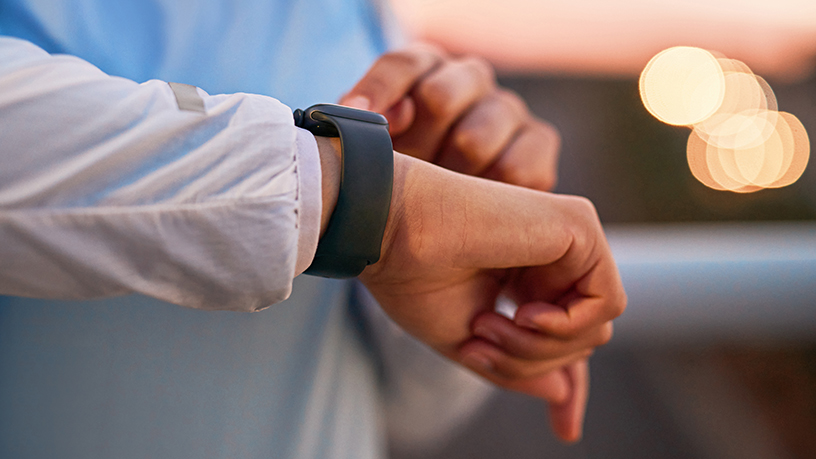
Smartwatches and wearables are no longer glorified step counters. Today, they can provide meaningful statistics about what’s happening inside your body.
“The real value of wearables is in the patterns they reveal over time,” says Sayan Mitra, researcher in digital health and lifestyle interventions from the Charles Perkins Centre at the University of Sydney. “A single step count, sleep score, or heart rate reading rarely tells the full story.”
“What matters more is whether something is changing in a sustained way compared with your own usual baseline.”
“For example, if your resting heart rate is gradually rising, your activity is dropping, or your sleep and daily routine are becoming more irregular, that may be a useful clue that something has shifted.”
“That is where wearables can be valuable: they bring health-related patterns into everyday life.”
Smartwatches don’t replace a health professional, but it’s great to take the data to a doctor to show any patterns they might be able to identify.
5 health clues your smartwatch may notice first
1. Higher resting heart rate (RHR)
Your resting heart rate is how many times your heart beats per minute when you are feeling calm and not active. For adults, a normal resting heart rate is between 60 and 100 beats per minute.2
A single heart rate reading doesn't tell the full story. Looking at changes over time compared with your usual resting heart rate can provide more meaningful insights into your cardiovascular health. Persistent increases may be worth paying attention to, particularly when accompanied by symptoms such as palpitations, breathlessness, dizziness or chest discomfort.2
“The most useful cardiovascular insight from a smartwatch is not one isolated reading. It's the pattern over time: changes in rhythm, resting heart rate, activity, and fitness compared with someone’s own baseline.”
If your resting heart rate (RHR) is consistently elevated, this could be a sign of lifestyle factors such as stress, lack of sleep, overtraining or excessive caffeine or alcohol consumption. It can also be a side effect of some medications.3 When your heart rate is consistently elevated, it means your heart is working harder than it needs to, which can lead to cardiovascular disease, which overtime can increase the risk of heart and kidney disease.4
If your heart is beating in an unusual way call 000 and ask for an ambulance.
2. Lower heart rate variability (HRV) and Atrial fibrillation
Heart rate variability is the millisecond-by-millisecond variation in time between consecutive heartbeats. There are subtle fluctuations between this, which shows how your nervous system is adapting to stress and other lifestyle factors.
Heart rate variability (HRV) varies widely in healthy adults and generally declines with age.5
The best way to work out what is normal for you is to track it over several weeks. A lower HRV can mean your nervous system is less resilient. This has strong links to stress and depression.6 You can increase your HRV by getting consistent amounts of sleep, reducing stress and avoiding alcohol. If you’re feeling stressed or have a consistently low mood, see your doctor for help.
“Some smartwatches can flag rhythm patterns that may suggest atrial fibrillation,” says Sayan. “This is an abnormal heart rhythm.”
Some smartwatches can detect irregular heart rhythms that may be associated with atrial fibrillation (AF). However, smartwatch notifications are not designed to diagnose medical conditions and should be interpreted alongside clinical assessment and testing where appropriate.1
3. Changes in sleep patterns
“Studies using wearables suggest that changes in sleep, physical activity, routine, and physiological signals can be associated with depression, anxiety, stress, and other mental health symptoms,” says Sayan. “However, while a wearable may show something has changed, it cannot tell you why.”
“For example, a person may be sleeping less, moving less, or showing a more irregular routine. That may reflect low mood, anxiety, burnout, or stress, but it could also reflect shift work, illness, medication, alcohol, parenting, pain, travel, or a busy period at work.”
It’s important to interpret these signals alongside how the person feels. If someone notices a real change and it fits with their lived experience, such as sleeping differently, moving less, withdrawing from usual activities, feeling flat, on edge, or overwhelmed, that may be a reason to speak with a GP or mental health professional.7
Continued poor sleep can lead to increased risk of obesity, diabetes, mental health problems, cardiovascular disease and certain types of cancer.8
4. Reduced daily movement or recovery drop-offs
It’s not unusual to have the odd day where your step count might be lower, or it takes your body longer to recover from a workout. But if your step count is continually declining and your recovery rate is getting higher, it’s worth considering what’s going on.
Wearables may help identify patterns associated with metabolic health, including physical activity levels, sedentary time, sleep consistency and changes in fitness over time.
That may be a useful prompt to adjust your lifestyle habits or speak with a GP.
5. Gradual increase in inactivity and calorie imbalance
Smartwatches use built-in accelerometers and gyroscopes to track prolonged periods without motion. This means they can identify sustained times of zero steps, which indicates periods of sitting or lying down. If you’re becoming increasingly sedentary and your calorie balance is out of sync, this could be a warning to examine your lifestyle and how it might be affecting your body.
“Wearables can help capture fewer steps, a slower walking pace, less steady walking, a new limp or a change in gait,” says Sayan. “Pain, arthritis, injury, muscle weakness, balance problems, neurological conditions, and deconditioning can all show up first as changes in movement.”
Changes in movement patterns may reflect a range of factors including injury, pain, reduced fitness, ageing, or underlying health conditions. Wearables may help make these changes more visible over time.8
Sitting for over 8 hours a day without physical activity drastically raises the risk of heart attacks and strokes,9 as well as the risk of type 2 diabetes.10 It can also result in musculoskeletal weakness, which can result in osteoporosis and increased likelihood of falls as you get older.11
How to track smartwatch data
The best way to use your smartwatch's data effectively is to look for trends over several weeks, says Sayan.
“From a prevention perspective, wearables are most useful when they help someone notice those patterns early, reflect on their behaviour, make a practical change, or start a more informed conversation with a health professional. They are not designed to diagnose disease on their own.”
“Their biggest value is not that they give people a perfect health score. It's that they can make gradual changes more visible before those changes are obvious in day-to-day life.”
When to be wary of your smartwatch
“The most important thing to understand with wearables is that the data is about context,” says Sayan. “Interpret wearable data against 3 things: your own usual baseline, how you actually feel, and whether the change is persistent.”
“Wearables are best treated as decision-support for the person, not as an automated verdict. Their strength is long-term monitoring in daily life. They can be very useful at showing that something is different from usual, but they are much less able to tell you exactly why that change has happened or whether it represents a specific disease.”
He adds, “avoid reacting too strongly to one isolated reading. Data may reflect health, but it may also reflect stress, poor sleep, travel, alcohol, illness, medication, or a temporary change in routine. It’s also important to be aware of the psychological side of wearables. Some people find self-monitoring motivating and useful, but others can become hypervigilant, anxious, or overly dependent on the numbers.”
Wearables are most useful when they help people notice patterns and better understand changes in their daily health and behaviour over time.1
Resources
Diabetes Australia offers information and support for people with diabetes and prediabetes.
The Heart Foundation has information about heart health and how wearables can track important heart data.
Blua Digital health by Bupa
Blua is Bupa’s new home for digital health services like online doctor appointments and delivery of prescription items and over-the-counter goods.

At Bupa, trust is everything
Our health and wellbeing information is regularly reviewed and maintained by a team of healthcare experts, to ensure its relevancy and accuracy. Everyone's health journey is unique and health outcomes vary from person to person.
This content is not a replacement for personalised and specific medical, healthcare, or other professional advice. If you have concerns about your health, see your doctor or other health professional.
1 Murray, J., et al. (2025). Wearable devices and cardiovascular health: revolutionizing remote monitoring and disease prevention. European Heart Journal Digital Health.
2 Healthdirect Australia. (n.d.). Resting heart rate.
3 Harvard Health Publishing. (2024). What your heart rate is telling you. Harvard Medical School.
4 Cooney, M. T., Vartiainen, E., Laatikainen, T., Juolevi, A., Dudina, A., & Graham, I. M. (2010). Elevated resting heart rate is an independent risk factor for cardiovascular disease in healthy men and women. American Heart Journal.
5 Nunan, D., Sandercock, G. R. H., & Brodie, D. A. (2010). A quantitative systematic review of normal values for short-term heart rate variability in healthy adults. Pacing and Clinical Electrophysiology.
6 Neuroscience (2024) The Predictive Potential of Heart Rate Variability for Depression Neuroscience
7 Mental Health Foundation. (2021). Sleep and mental health.
8 Medic, G., Wille, M., & Hemels, M. E. H. (2017). Short- and long-term health consequences of sleep disruption. Nature and Science of Sleep.
9 American Journal of Medicine (2017) Time Spent Sitting as an Independent Risk Factor for Cardiovascular Disease American Journal of Medicine
10 Medicine & Science in Sports & Exercise (2014) Sedentary behaviour as a mediator of type 2 diabetes Medicine & Science in Sports & Exercise
11 World Health Organization. (2020). WHO guidelines on physical activity and sedentary behaviour.
You might also like
5 ways to track your steps
Tracking your steps can be simple with the right tool. Discover 5 easy ways to make sure you’re hitting your targets.

The power of walking
A simple stroll can be an overlooked activity with many health benefits. Find out how getting your daily steps in can help you march towards a healthier, happier you.

Heart health check: The 20-minute test that could save your life
Heart disease is a leading cause of death in Australia. Booking in for a heart health check could help you identify your risks and save your life.

Health checks and screening at every stage of life
It’s important to make sure you get the right health checks throughout your life, from your 20s to your 50s and beyond. Check out our guide to learn more.