You can help babies and toddlers enjoy brushing their teeth by getting them used to the habit young and making tooth brushing fun.

By Blua Digital health by Bupa

5 minute read
Published 11 April 2024
You can help babies and toddlers enjoy brushing their teeth by getting them used to the habit young and making tooth brushing fun.
Dummies and thumb sucking should be discouraged beyond the toddler years.
Blua Digital health by Bupa
Blua is Bupa’s new home for digital health services like online doctor appointments and delivery of prescription items and over-the-counter goods.
By Blua Digital health by Bupa
There are special toothbrushes and toothpastes available for your baby.
Your baby’s first tooth is an exciting milestone. It’s also the beginning of learning to look after your child’s oral health and setting them up with great habits for life.
“As soon as your baby gets their first tooth, you should start brushing it,” says Head Dentist at Bupa, Dr Cathryn Madden.
“Baby toothbrushes either come with very, very soft bristles, or a silicone-style brush,” says Dr Madden.
“It doesn’t matter which one you use. To start with, it will be more a case of them just chewing on it, but that’s okay. At this stage it’s simply about getting them used to having something in their mouth.”
You can start using toothpaste as soon as your baby has their first tooth.
“You should use an age-appropriate toothpaste,” says Dr Madden. “The most important thing is the amount you’re using. You only need the tiniest smear of toothpaste because babies can’t spit it out. It’s important there’s a small amount of fluoride in the toothpaste too.”
Dr Madden says that some children aren’t keen on strong minty flavours to start with. “There are other flavours on the market, but at some point it’s a good idea to wean them on to minty flavours as that’s mainly what’s available as they get older.
Many young children don’t like having a toothbrush shoved in their mouth.
“Let them have a go at doing it themselves,” says Dr Madden. “Let them do the morning brush, then a parent can do the evening brush.”
It’s also important for them to see you brush your teeth. “Let them watch you, so they understand it’s a normal activity,” she adds.
Using timers, apps and songs can all help make teeth brushing more fun.
“Electric toothbrushes can make it more interesting too. You still have to use them appropriately, but if it makes it more fun, then go for it.”
“Dummies can affect the alignment of teeth,” says Dr Madden. “You can always tell a child who sucks a dummy or their thumb, because when they bite together, there's a big gap between their top and bottom teeth where their thumb or dummy usually fits. It can affect speech too.”
“You need to actively try and stop children from these habits from around 2 and a half. If they’re doing it beyond the age of 3 or 4, it can affect the alignment of permanent teeth too.”
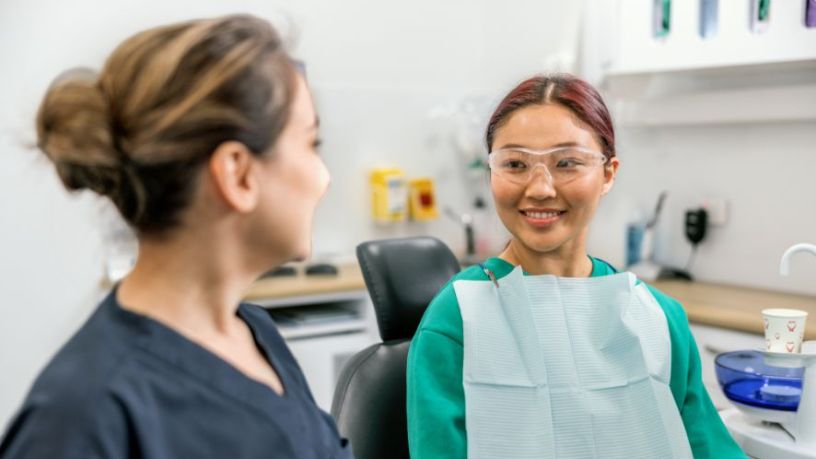
“It’s good for babies and toddlers to tag along to a check-up with a parent or sibling, and watch from a pushchair,” says Dr Madden.
“The most important thing is that they know the dentist is not anything to be afraid of. The dentist can have a quick look, or if there are any concerns, give preventive advice.”
“Realistically toddlers aren’t going to sit in a dentist’s chair until they’re 2 or 3 years old,” she adds. “It’s a good idea to let them sit in your lap on the chair so it’s not overwhelming.”
Just familiarising them with the surgery is a great start.
At Bupa, trust is everything
Our health and wellbeing information is regularly reviewed and maintained by a team of healthcare experts, to ensure its relevancy and accuracy. Everyone's health journey is unique and health outcomes vary from person to person.
This content is not a replacement for personalised and specific medical, healthcare, or other professional advice. If you have concerns about your health, see your doctor or other health professional.
Good oral hygiene does more than protect your teeth; it may also support your heart, blood sugar and overall health.
You may have heard about natural toothpaste, but is this supposedly healthier alterative better or even safer than your usual store-bought toothpaste?
Regular dental check-ups are an important part of maintaining a healthy smile. Discover 6 things you should know about visiting a dentist in Australia.
When you get braces, you don’t just have to get used to how they feel. You’ll also have to learn how to clean your teeth and gums properly.
Bupa acknowledges and shows respect to the Traditional Custodians of Australian land. We pay our respects to Elders past and present and recognise their cultural heritage, beliefs, and continuing connection to land, waters, and community. We embrace their knowledge on how to protect and nurture these lands, and all they contain, to keep this country and people healthy.