

By Katherine Chatfield Writer
On this page
Key takeaways
- Learning how to use your body effectively may help prevent back pain.
- Weaker muscles are more prone to being sore and tight.
- Regular movement can help boost blood flow and reduce stiffness in the back.
Back pain isn’t just for older people; it can happen to anyone.
The good news is that learning how to use your body effectively might help prevent a sore back.
“When the demands you place on your back are greater than its resilience, you can run into problems,” says Master of Advanced Clinical Physiotherapy at Adelaide University, and physiotherapist at More Good Days, Dr Dan Harvie.
“Your body needs strength, endurance and resilience to meet the demands of your daily activity.”
Resilience is about much more than just physical strength.
“There’s a connection between being strong and having a healthy back,” says Dan.
“But when we do studies that involve people getting stronger as a treatment for back pain, the people who benefit the most are those who start to feel stronger and more confident in their bodies, not necessarily those who get physically stronger.”1
Why back strength matters
Your back muscles support your spine, allowing you to stand and sit upright. They also help with movement, allowing you to bend, lift, and twist your body. Strong back muscles can protect your discs and ligaments during movement.
“Weaker muscles have to operate at a higher percentage of their maximum capacity,” explains Dan. “This means they are more prone to being physically stressed and can feel sore and tight.”
“Being stronger gives you more physical resilience; think of it as having a buffer to resist the stresses of daily life.”
He adds; “Stronger, more resilient muscles also do a better job of protecting the joints and also recover a bit faster from exercise too.”
How do back muscles help with posture?
“Stronger muscles are more resilient at holding you in sustained postures,” says Dan. “But most people don’t need to worry too much about an ‘ideal’ posture. The key is getting variation; that means standing, sitting and moving throughout the day rather than being in one position for hours at a time.”
Everyday habits that protect your back
Movement
“Motion is lotion,” says Dan. Staying active helps boost blood flow, reduces stiffness and releases endorphins.”
“You don’t need heavy weights or long workouts; simple movements and daily habits make a big difference.”
“Taking breaks from the computer or desk every 20 minutes or so can be helpful,” says Dan. “Walking around, taking the stairs, and even wriggling your body can be beneficial.”
When it comes to more formal exercise, “the most important exercise is the one you’ll actually do,” says Dan. “Ideally do something to get your heart rate up, such as walking, swimming or cycling.” “Then something to add load and help with strength, such as Pilates, lifting weights or body weight exercises.”
A good workstation
An ergonomic workspace can help keep back pain at bay.
Your computer monitor should be at eye level, so your neck isn’t angled up or down. Keep your elbows at 90 degrees and your feet flat on the floor.
“Using lumbar support, such as a rolled-up towel behind your lower back, can help make you more comfortable,” says Dan. “The most important thing is to do what is comfortable, and take breaks, rather than getting too focused on the ideal position.”
Back strengthening exercises
These equipment-free exercises can be done in ten minutes a day. Aim to do 2 to 3 sets of each exercise. Choose a number of repetitions that is achievable but challenging.
Bird dog
Improves spinal stability and control
- Begin on your hands and knees.
- Hands should be directly under your shoulders and knees directly under your hips.
- Keep your back flat and your abdominals pulled in.
- Lift and extend your right arm straight out in front of you. At the same time, extend your left leg behind you. Keep your gaze on the floor to maintain a neutral neck.
- Pause for a few seconds. Your lower back should not arch. Your body should form a straight line from your fingertips to your toes.
- Slowly return your hand and knee to the floor.
- Repeat with the left arm and right leg.
Dead bug
Builds core strength and helps stabilise spine
- Lie on the floor, with your knees bent.
- Lift your hands so your elbows are above your shoulders with your fists facing in toward each other.
- Lift your legs so your knees are directly over your hips.
- Exhale and slowly lower your right arm and left leg until they’re just above the floor.
- Inhale and bring them back to the starting position.
- Repeat on the opposite side.
Superman
Strengthens lower back and postural muscles
- Lie face down on the floor. Extend your arms in front of you and keep your legs straight.
- Gently draw your navel off the floor. This helps protect your lower back.
- Lift your arms, chest, and legs a few inches off the ground. Keep your gaze down to avoid straining your neck.
- Maintain this “Superman” position for 2 to 3 seconds. You should feel a contraction in your lower back and glutes.
- Return to the starting position with control.
Glute bridges
Activates the gluteal muscles. These play a key role in supporting the lower back, reducing strain on the lumbar spine.
- Lie on your back with your knees bent and your feet flat on the floor. They should be hip-width apart. Your arms should rest by your sides.
- Brace your abdominal muscles by gently pulling your belly button towards your spine.
- Push through your heels to raise your hips toward the ceiling. Keep your shoulders and upper back on the floor.
- Form a straight line from your shoulders to your knees. Focus on squeezing your glutes.
- Slowly lower your hips back to the starting position.
When to get help
If you have uncontrolled pain, pins and needles, numbness, weakness in your legs, or a change in your bladder or bowel function, get checked immediately by your GP.
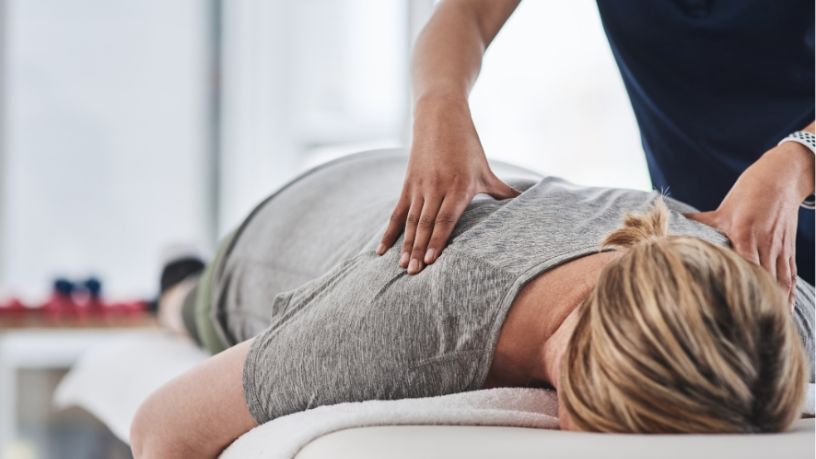
A physiotherapist can help you understand your back pain, prescribe personalised exercises and help calm symptoms. “Physios in Australia are first contact practitioners,” explains Dan. “They're trained to diagnose and manage problems like back pain without a referral.”
Members First Network
Our extensive network provides certainty of costs for extras services: dental, physio, podiatry and chiropractic.
Resources
MoreGoodDays® at home back pain program is a science-backed back pain management and recovery program from the comfort of home. It provides chronic pain management through science-backed at-home programs that include education and guidance from physiotherapists and psychologists.
My Back Pain has online resources on back pain and how to manage it.
Katherine Chatfield Writer
Katherine is a journalist who specialises in jargon-free health and lifestyle content.

At Bupa, trust is everything
Our health and wellbeing information is regularly reviewed and maintained by a team of healthcare experts, to ensure its relevancy and accuracy. Everyone's health journey is unique and health outcomes vary from person to person.
This content is not a replacement for personalised and specific medical, healthcare, or other professional advice. If you have concerns about your health, see your doctor or other health professional.
1 Musculoskeletal Science and Practice (2021) Why is exercise prescribed for people with chronic low back pain?. Musculoskeletal Science and Practice
You might also like
Understanding back pain: Causes, symptoms and treatment options
Learn what causes back pain, how to recognise symptoms, and your options for relief.

When to see a physio: Key signs you need treatment
Not sure if you need physiotherapy? Discover the key signs it's time to see a physio and what to expect at your first appointment.

3 simple exercises to improve your posture
These simple physio-led posture exercises can help relieve back and neck pain, improve alignment and support your core.

Top anti-inflammatory foods to help reduce joint pain
Discover some of the best anti-inflammatory foods to relieve joint pain and arthritis. Learn what to eat to support healthier joints and reduce inflammation.