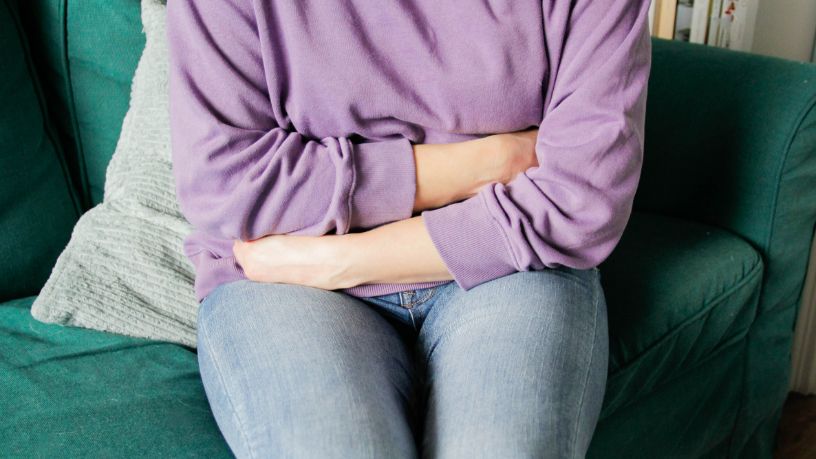
The gut microbiome affects digestion, immunity and gut–brain signalling, shaping both physical and mental health.
By Stephanie Margerison Writer

By Stephanie Margerison Writer
The gut microbiome affects digestion, immunity and gut–brain signalling, shaping both physical and mental health.
In IBD, microbiome changes can drive inflammation; in IBS, they may influence symptoms without causing inflammation.
Diet strongly shapes the microbiome and can support better gut health and symptom management.
Your gut microbiome is the community of microorganisms that live inside your gastrointestinal system and help you break down food. It plays a crucial role on both your physical and mental health.1
It plays a key role in digestion, immunity and gut–brain signalling, with important differences in how it influences irritable bowel syndrome (IBS) and inflammatory bowel disease (IBD).
“The gut microbiome is all of the microorganisms that live in your gastrointestinal (GI) tract, the tube from your mouth to your anus,” says Dr Steven Leach, Senior Lecturer at the University of New South Wales and a researcher specialising in gut bacteria.
While most of these microorganisms are bacteria, viruses, fungi and a different type of bacteria-like organism called ‘archaea’ can also form part of your gut microbiome, Dr Leach adds.
We all have a unique microbiome that begins to accumulate from birth.1
The microorganisms in your body change and increase in number as you move farther along your GI tract.
“There are only a small number of bacteria in your mouth, but when you get to your large colon there are up to 100 trillion,” says Dr Leach.
The good bacteria in your gut help your body digest food, working with your immune system to help shield you from diseases.
Your gut microbiome can affect every organ in your body. As well as impacting your immune system, it’s linked to a range of health functions, including:
Signs that your gut health might not be as good as it can include:
As your microbiome is mainly influenced by what you eat, the best way to improve it's through a healthy, balanced diet. This should include a balanced daily portion of fresh fruit, vegetables, lean protein, whole grains and dairy (or alternatives).2
“There's also some evidence that the Mediterranean Diet (lots of fruit and vegetables but also a good balance of fats) is a good diet for your gut microbiome,” Dr Leach adds.
If you suffer from a gut condition, it can help to understand how your microbiome may be affecting it.
Inflammatory bowel disease (IBD), which includes ulcerative colitis and Crohn’s disease, is a chronic disorder that affects the GI tract. And, as Dr Leach points out, the gut microbiome plays a significant role.
“The microbiome is a driving factor in causing inflammation in IBD,” he says. “Treatment of the microbiome may be through diet or antibiotics. There’s also something called Faecal Microbiota Transplant (FMT), where the microbiome of the patient is removed and replaced with the microbiome of a donor.”
When it comes to irritable bowel syndrome (IBS), a similar but fundamentally different condition, Dr Leach says that the role of the microbiome is harder to define. This is because “unlike IBD, the microbiome is not causing inflammation in IBS”.
Though IBS may still be influenced by abnormal levels of bacteria in your gut microbiome.
“Some studies have shown that the microbiome may be altered in some people with IBS,” Dr Leach says. “This changed microbiome may stimulate nerves in the GI tract (called the ‘gut-brain axis’), which results in symptoms of IBS in some people.”3
Further evidence suggests that IBS can develop after intestinal infection or antibiotic use, and that probiotics, which influence the gut microbiome, may help improve symptoms in some people with IBS.4

Crohn’s & Colitis Australia works towards empowering people living with IBD. Visit their website for helpful resources and information, or call them on 1800 138 029.
Check out the Gastroenterologist Society of Australia’s patient resources for information about gastrointestinal issues.
Stephanie Margerison Writer
Steph is a creative content writer and a registered nurse who has made a career out of making people happier, healthier humans.
At Bupa, trust is everything
Our health and wellbeing information is regularly reviewed and maintained by a team of healthcare experts, to ensure its relevancy and accuracy. Everyone's health journey is unique and health outcomes vary from person to person.
This content is not a replacement for personalised and specific medical, healthcare, or other professional advice. If you have concerns about your health, see your doctor or other health professional.
1 Better Health Channel. (2024). Gut health. Victoria State Government, Department of Health.
2 National Health and Medical Research Council. (2024). Australian guide to healthy eating. Australian Government, Department of Health and Aging.
3 Pimentel, M. & Lembo, A. (2020). Microbiome and Its Role in Irritable Bowel Syndrome. Digestive Diseases and Sciences, 65(3), 829-839.
4 Lee, B. J. & Bak, Y. T. (2011). Irritable bowel syndrome, gut microbiota and probiotics. Journal of Neurogastroenterology and Motility, 17(3), 252-266.
Inflammatory bowel disease (IBD) is a serious chronic illness that can be managed with the right support.
IBS can affect your life in a range of ways, and there’s no cure for the condition. So, it’s important to understand the best ways to manage it.
IBS is a gut disorder that can include symptoms like diarrhoea, bloating and abdominal pain. Find out about the symptoms and how you can get diagnosed.
Probiotic supplements claim to improve your gut health, but do they actually work? Find out if you should be taking them.